Strategy is much more than choosing a "position" (42)
 Kim Warren
Successful firms rarely change their mind about who they serve, with what products/services, and how they do it. There's so much more to strategy.
Whether we are talking about developing strategy or creating a business model, common methods share a big limitation - they only specify your "position".

Our professional course on strategy and implementation goes way beyond limited 'position' frameworks. Low-cost option + coupon blog20 for 20% discount.
What the heck is a strategic "position"
Position is simply a definition of "where" you plan to compete …
- who do we aim to serve (exactly which types and segments of customers)
- what will we offer them (exactly what products/services, meeting which of their needs)
- how will we do that?
Clearly we could aim to serve more than one segment - e.g. to take our restaurant example from earlier posts, we might aim for younger couples, and older couples, and families with kids. And we could offer both casual can't-be-bothered-to-cook meals, and special-occasion meals.
Let's look at a few common frameworks against each of those questions. And summarise how some might work for Beyond Meat Inc … [BM] a business offering non-meat products to consumers thro' both stores and restaurants, from our standard strategy course.
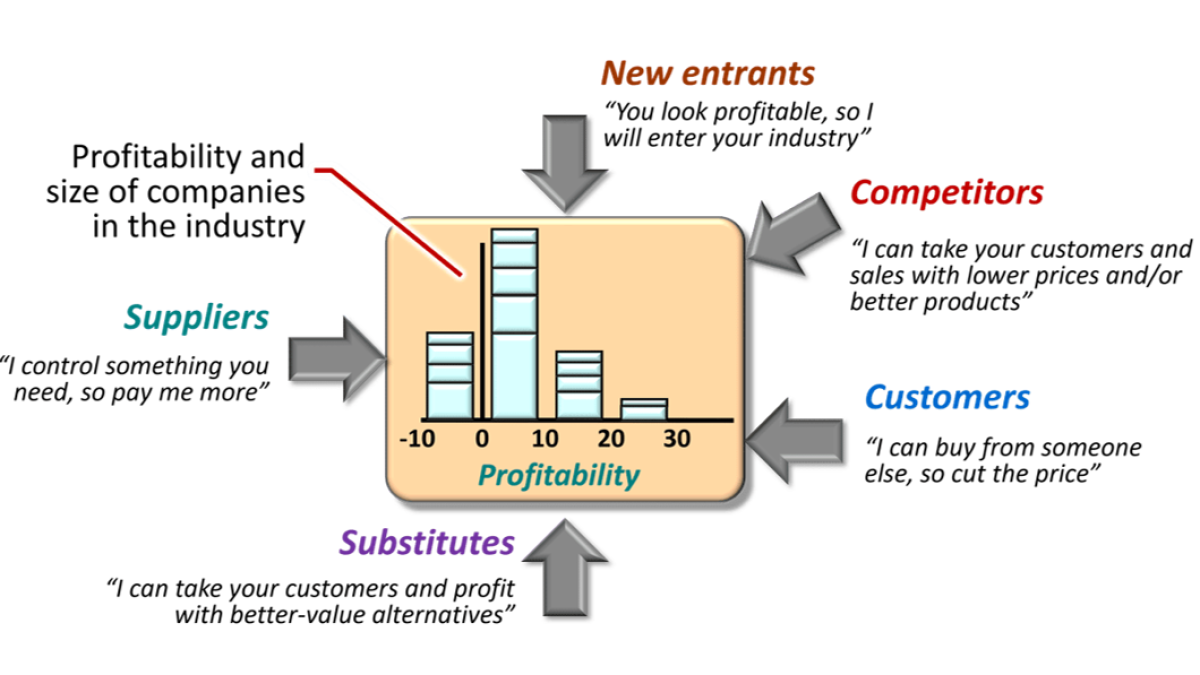
Competitive forces.
After SWOT [!], maybe this is the best known strategy framework of all? It basically says that our ability to make high profitability is limited by other actors who will likely "compete away" that profitability. The stronger are those forces, the lower is average profitability in the sector, and the harder it is to do better than that average. So … we should choose a "position" (answers to those 3 questions) where those forces are not too strong or can be mitigated.
These forces are notoriously tough in the industry that Beyond Meat is trying to enter (supplying fast-moving consumer goods to supermarkets), so it will be very tough to be profitable!
Value curve
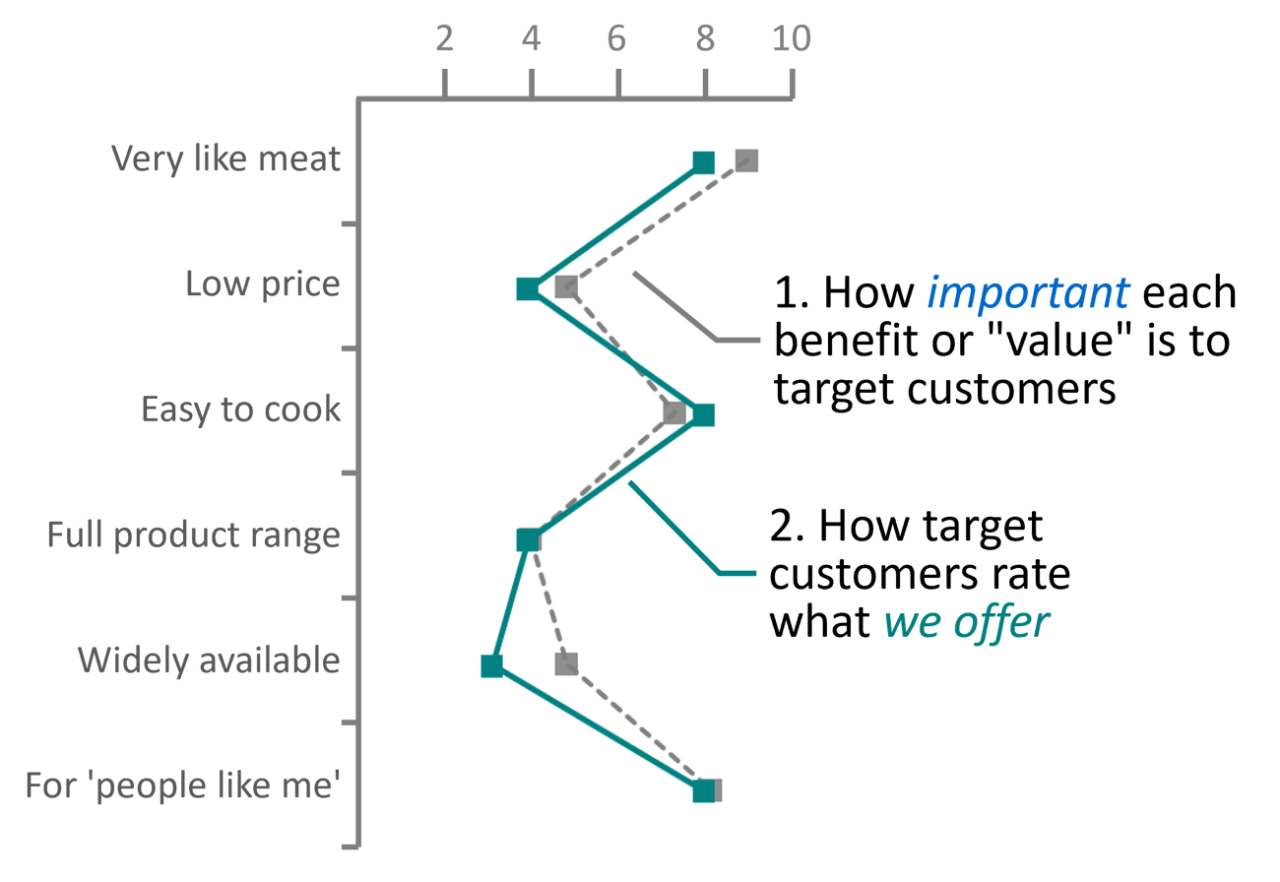
This framework shows the importance customers place on various benefits or "values" offered by our kind of product, and compares those against what they feel our product actually offers.
Here's what BM might believe, and what they aim for …
Business model canvas.
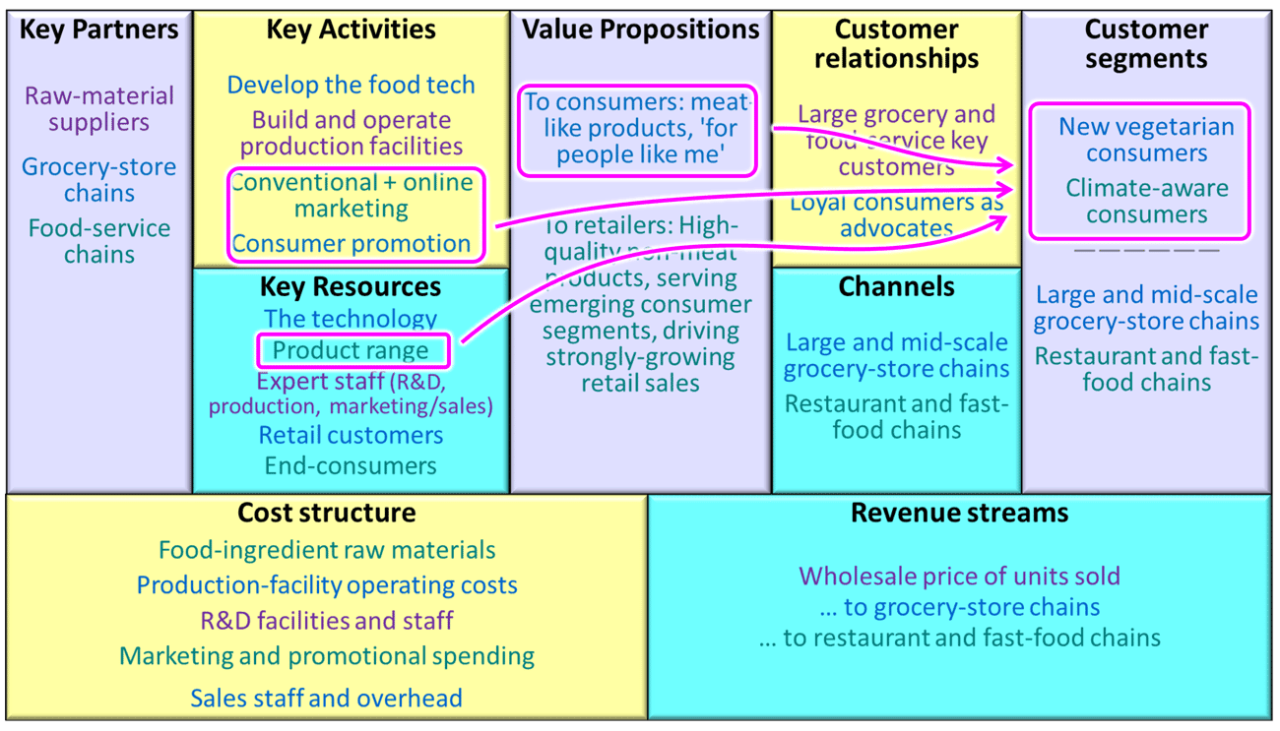
This framework lays out a set of business model elements that need to be consistent with each other in order to capture and retain customers. Here's how BM's canvas might look, highlighting elements needed to attract target consumers.
Useful frameworks, but not nearly enough
Yes, we do need to know how tough it will be to be profitable in our chosen "position", and figure out how we might mitigate pressures from those other actors. Yes, we need to match what we offer to the benefits customers seek. Yes, we need to ensure all parts of the business and its allies work together well.
But once we have got that right none of this changes! – at least not much, or very often. An extreme example - furniture store-chain IKEA would get exactly the same findings from these frameworks today as when they were founded over 50 years ago!
So what's the problem?
Well, there are two huge things missing:
- None of this tells us what to do. "Strategy" is a continuing stream of actions and decisions that should build the business and its performance.
- None of this gives us any numbers. There is no way from these frameworks to calculate or even estimate how customers and sales might grow, what costs will arise from building and operating what is needed to make that happen, and thus no way to estimate future profit growth.
So what we need from our strategy away-days is to:
- specify and quantify the key business factors - products, capacity, staff [by type], customers [by segment], intermediaries [if relevant], and how their scale and quality is changing
- estimate how each factor needs to grow over time, checking for consistency [e.g. is projected growth in capacity and service staff enough to support projected customers and sales?]
- develop a timed-action plan to make all of those things happen, which will include significant initiatives and improvement programs
Lastly, "strategy" is not an annual ritual - it is a constant and changing stream of well-worked-out decisions, actions and initiatives. So we need to continually return to that plan to check it against what has actually happened, and adjust plans and projections accordingly.
______________
Our strategy course for leaders explains how to use these standard strategy methods to validate your strategic position but also explains how to do all those other essential tasks to get a strategic plan you can actually implement.
There is a lower-price "essentials" version of the course. Enter coupon blog20 at checkout for a 20% discount on the full price.
Categories: : implementation, related course, strategy