How an organisation is a management breeding machine! (45)
 Kim Warren
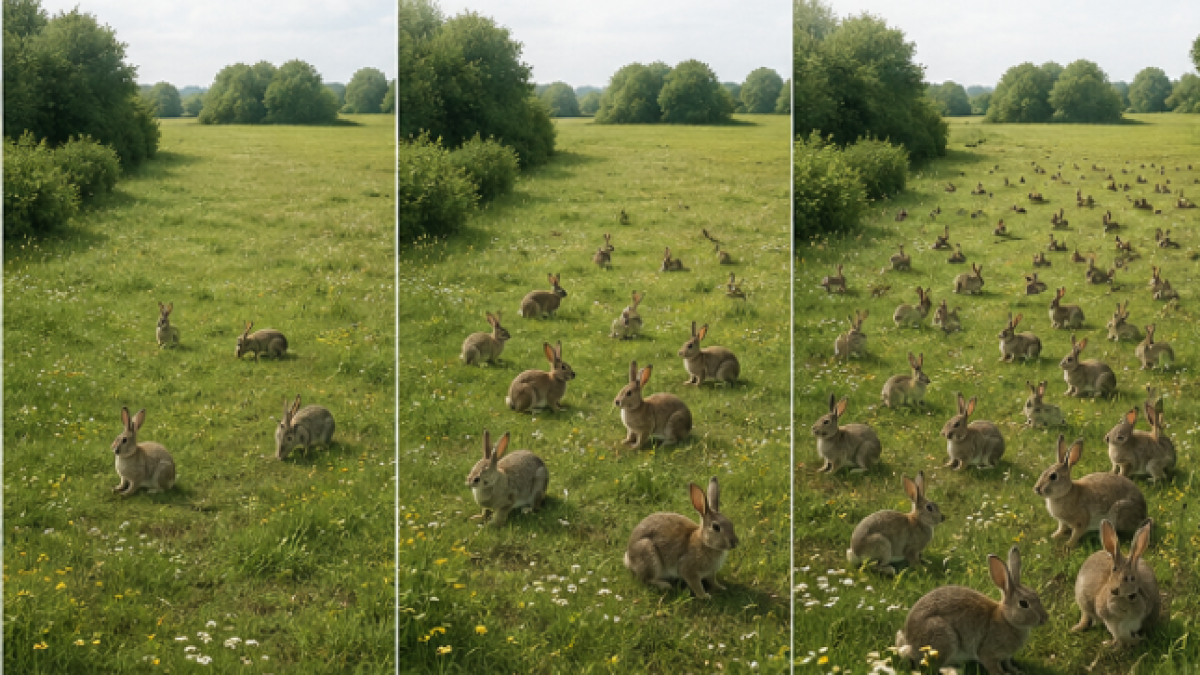
Normal hiring, promotion and turnover rates push ever-more people up into more senior levels over time - a big challenge for human resource strategy.
Here's a small quiz - don't scroll down for the answer just yet.
An organisation starts with 250 junior staff, 50 mid-level, and 10 senior leaders. Then:
- each year,10% of seniors leave (so average tenure is 10 years)
- … and we promote 10% of mid-level staff, and another 20% of mid-level people leave
- … and we promote 30% of juniors, another 30% of juniors leave, and we hire enough to replace both of those losses from the junior group.
So - how many staff do we have at each level after 10 years?

A standard, free staff pipeline model plays out this issue.

Get our short course on how dynamic models can help
with HR/staffing issues. Coupon blog20 for 20% discount.
____________
Now you have your own result, scroll down for our answer (figure 1).
This is probably not news to HR professionals, but it may surprise others.
Why does the hierarchy breed senior people?
This outcome is not such a puzzle - if we have many times more people at a lower level than an upper level, then promoting even a small percentage from that lower level can easily more-than replace the people who leave from the upper level.
It is a slightly smaller problem if we are growing - growing juniors by 10%/year gives you 713 juniors, 532 mid-level and 221 seniors after 10 years. But the supervisory ratios are still squished from the 25 : 5 : 1 we start with. Even 20%/year growth does not keep the organisation in balance, ending with 1858, 1113, 344 people in the three groups.
Figure 1: Numbers of people at each level after 10 years.

Figure 2 below shows how the numbers change over time - not exactly intuitive, but that's what the "physics" does. (If you built a model for this, don't forget to add the numbers to get to the end of year 10)
Figure 2: How numbers of people at each level change over time

What to do?
To deal with this we must either promote fewer people - but mid-level folk are already waiting 10 years for promotion, and juniors are waiting 3 years
… and/or clear out upper levels more quickly. (This is why consulting firms operate an 'up or-out' policy, in which senior staff are retired early, and staff at other levels must seek promotion after a few years, or they are out-placed - usually to client organisations)
This may explain some common issues:
- a tendency to invent more levels in the hierarchy, so people can be promoted, though at a financial cost from lower supervisory ratios
- a serious aging problem in mature businesses - we don't move older staff on, so cannot recruit or promote younger staff
- a widespread population of middle-aged jobless professionals, though some then start their own businesses, or else join the ranks of the sole-trader consultants.
What's for sure is that our staffing strategy needs to deal with this challenge!
________________
See our short course explaining how dynamics models are helpful for a range of common people-issues … coupon blog20 gets followers a 20% discount
Categories: : business modeling, model available, related course, staffing & HR