The Net Promoter Score hype (03)
 Kim Warren
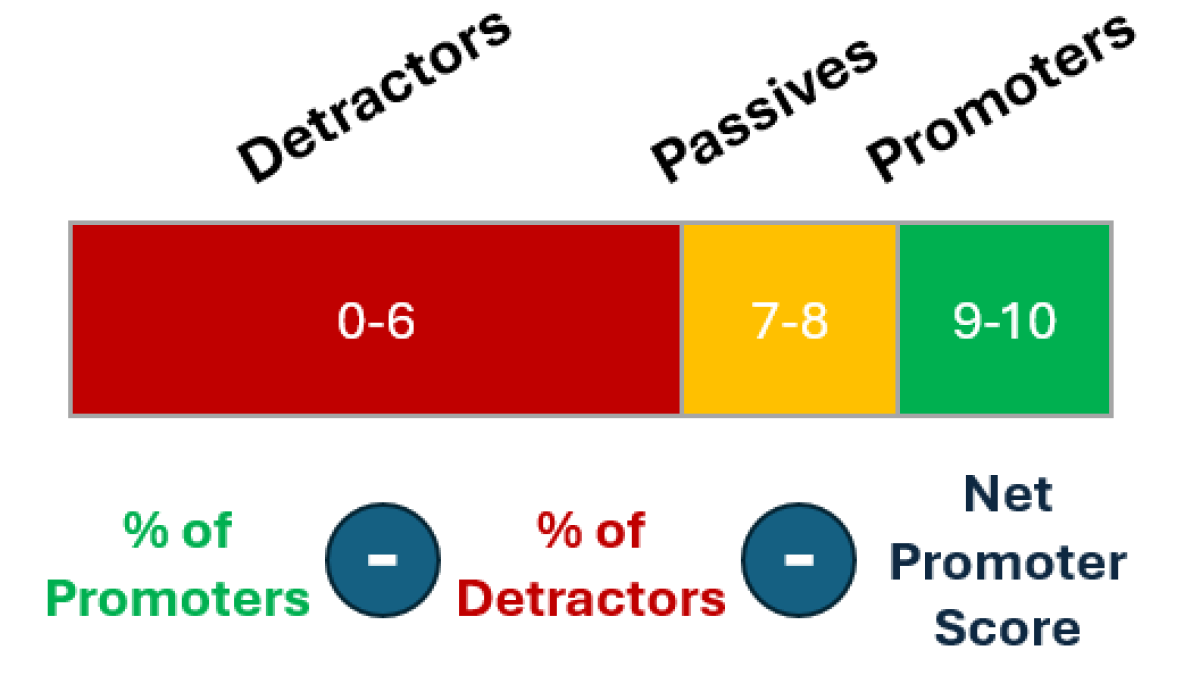
How the widely popular Net Promoter Score is a poor basis for planning and achieving sales growth - and a stronger alternative.
The Net Promoter Score (NPS) magic bullet
Leaders understandably dream of simple tools that will solve their biggest challenges, and how to drive sales growth is one of the bigg
est. Many think they have found that magic bullet with NPS – "Never mind all the other things that may matter, just get a good NPS and sales growth will magically follow."
NPS claims to "predict business growth" ...

But NPS can’t get close to fulfilling that promise. The basics of where sales come from are …
Sales = the Stock of customers * their purchase rate per customer
The Stock of customers = last month’s customers + customers won minus customers lost

So, there are 3 levers – the win-rate, the loss-rate and the purchase rate.
What is NPS missing?
First, even NPS itself claims to be relevant to only one of these – the win-rate. Yes, ‘promoters’ may be less likely to leave, and may purchase more, but NPS doesn’t ask either question.
Then, ‘detractor’ implies that respondents explicitly bad-mouth the brand and both encourage other customers to be lost and stop new customers being won. But it is very unlikely that any but the most angry customers talk down the brand at all, let alone try to influence others in those two ways.
Next, there is the ‘how likely …’ issue. What in fact impacts on the customer win-rate is whether customers actually recommend it, not whether they would do so if asked. We would likely recommend very many products or services, if asked, but we never are asked, so make no effort to do so.
Then the choice of boundaries is arbitrary – why would a 6/10 customer say or do anything to harm the brand, and why would a 8/10 customer not be quite positive about it? This after all is a 4/5 rating that most products would be quite happy to get and certainly not bad enough to discourage new buyers unless the context offers many 4.5/5 alternatives.
And then there’s all the marketing, sales effort, pricing, plus those same factors for competitors. e.g. solid promotion effort for a 7/10 product could easily win new customers, while zero sales effort on a 10/10 product wins nothing – similarly for a product priced 10% above or below rival products.
The smarter questions to ask
To really understand what is actually driving sales growth, we need a simple set of questions to a good sample of possible customers in the product-space, that tell us what those 3 key rates actually are, starting with something like:
- When did you last buy this product? ‘Never’ says this is not a customer but may potentially be, and if the last date is much longer in the past than typical buying frequency, this is likely a lost customer.
- When did you previously buy it? If ‘never’ but the answer to Q.1 has a date, this is a new customer – if answers to both Q.1 and Q.2 both have a date, it tells you the frequency
… to which we add questions about motivation – why did they buy for the first time, why did they stop buying, why buy with that frequency? Among these answers, just one may be “because someone recommended it”.
__________
This 3-item model of sales growth is just one of several useful marketing and sales models.

Learn the principles in our short online course.
20% discount with coupon blog20
Categories: : marketing & sales, model available