Strategic planning - what's the point? (79)
 Kim Warren
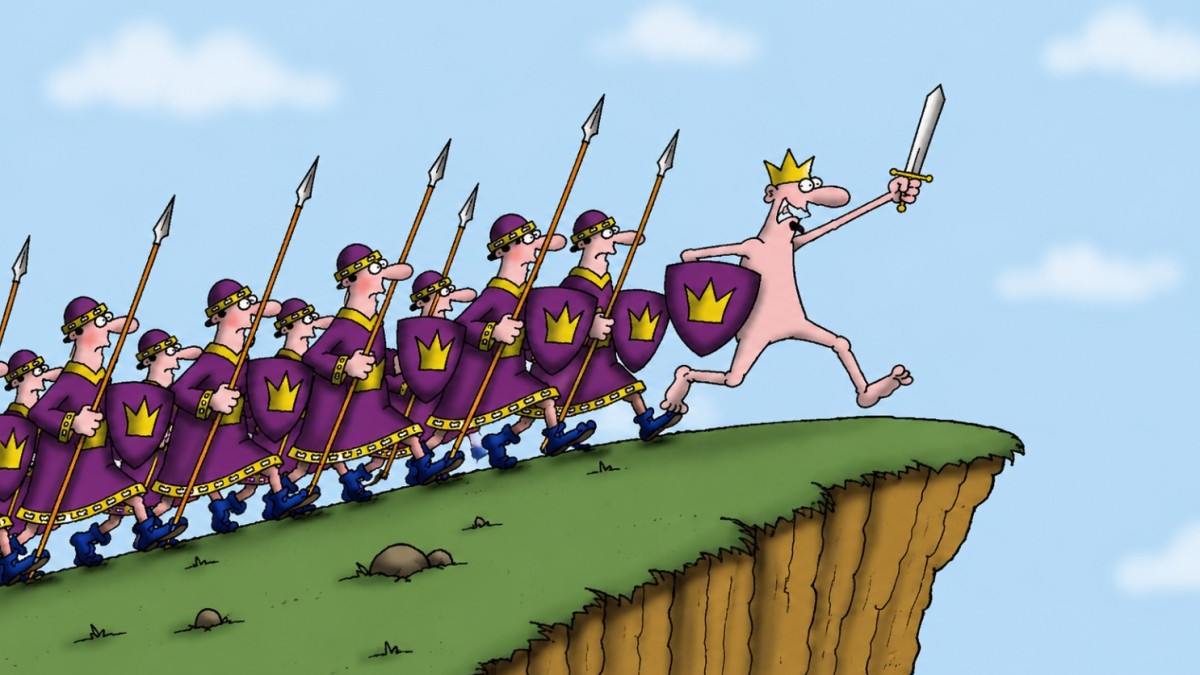
We are still cursed by a decades-long attack on the whole notion of ‘strategic planning’. We need how BEST to do strategy, not how it mostly IS done.
I previously offered a rigorous process for getting a well-founded and joined-up strategic plan – capable of generating timed, adaptable action-plans across the business.

Get our professional course on strategy and implementation.
Coupon blog20 for 20% discount.
But we are still suffering from a decades-long attack on the whole notion of ‘strategic planning’. Prof. Henry Mintzberg and friends ridiculed the value of having a deliberate strategy, and claimed instead that real-world strategy should be emergent.
Two big flaws in this attack …
The caricature of “deliberate” strategy
A great way to discredit someone’s views or behaviour is to set up a ridiculous caricature, like this "deliberate" strategy process ...

- analyse masses of data about the industry environment and get a forecast for how our market will develop
- a central expert team then defines a strategy, and issues planning instructions to business units and functions to get that strategy enacted
- top management then sticks to that plan, come hell or high water, beating up line managers if they miss targets or go off-piste with decisions or actions inconsistent with that plan
(Sounds a bit like the Soviet-era 5-year Plans for communist USSR !)
That is NOT how organisations with strong deliberate strategies actually behave. They develop the plans with the people who will have to make them happen, and fully expect those plans to evolve.
How strategy is actually done -v- how it is best done
The second flaw in the emergent/process case is to claim that we can see how strategy should be done by examining how organisations actually do strategy in practice. (There’s even a whole academic management sub-field of ‘Strategy as Practice’)
I am going to do my own bit of caricaturing here … This is like taking a video of a wedding reception and concluding that the Dad-dancing we see is how best to dance – the most fun to do and the most enjoyable to watch. In reality, of course, while there may be some stylish movers out there, most are – to say the least – not!
We also know that if we really want to understand the most fun and impressive dancing, we turn to "Strictly Come Dancing", where we see how the top professionals do it, not the mass of amateurs.
Formally, I guess, this is contrasting a ‘positivist‘ view – how we observe things actually to be done – with a ‘normative‘ view – how things would best be done.
The deliberate, emergent strategy
Like it or not, we always have a deliberate strategy, whether it’s explicit or not. Even that darned annual budget implies a strategy – what we are going to do, at what cost, to generate what results.
… and even in the most fast-moving, agile, entrepreneurial settings, leaders must pursue what they believe to be mutually consistent choices for some period of time before they reflect and adjust. As I have noted before:
Successful organisations do not keep changing
their mind about what they do!
.. although in those most frenetic early start-ups, there may be an early switch or two.
So there is always a deliberate strategy, based on how we think the market opportunity might develop or how we might make it develop.
… and it is always better to be explicit about that expectation and about our plans to exploit it, than leave everyone clueless about how we are trying to build the business. (Mintzberg & co. choose not to mention that a perpetual criticism by employees of senior management is that they seem to have no strategy!)
Adapt, adapt
But this does not mean that a ‘deliberate’ strategy is set in concrete. As I explained last time, strong performing organisations deliberately adapt that deliberate strategy, by continually checking how the environment and the organisation’s performance are doing against their most recent expectations.

We are like a dog catching a frisbee – constantly watching where it is going, and adjusting our path to intercept it.
What we are not doing, as the caricature of deliberate strategy claims, is sitting down to compute where the frisbee will land and heading straight there! … because the wind will make that destination wrong, and other dogs will get the frisbee first!
The big challenge, of course, is how to figure out that latest view of the frisbee’s path? ... that's for next time.
Categories: : business performance, related course, strategy